Closing Costs in Los Cabos: What Foreign Buyers Actually Pay Before Getting the Keys
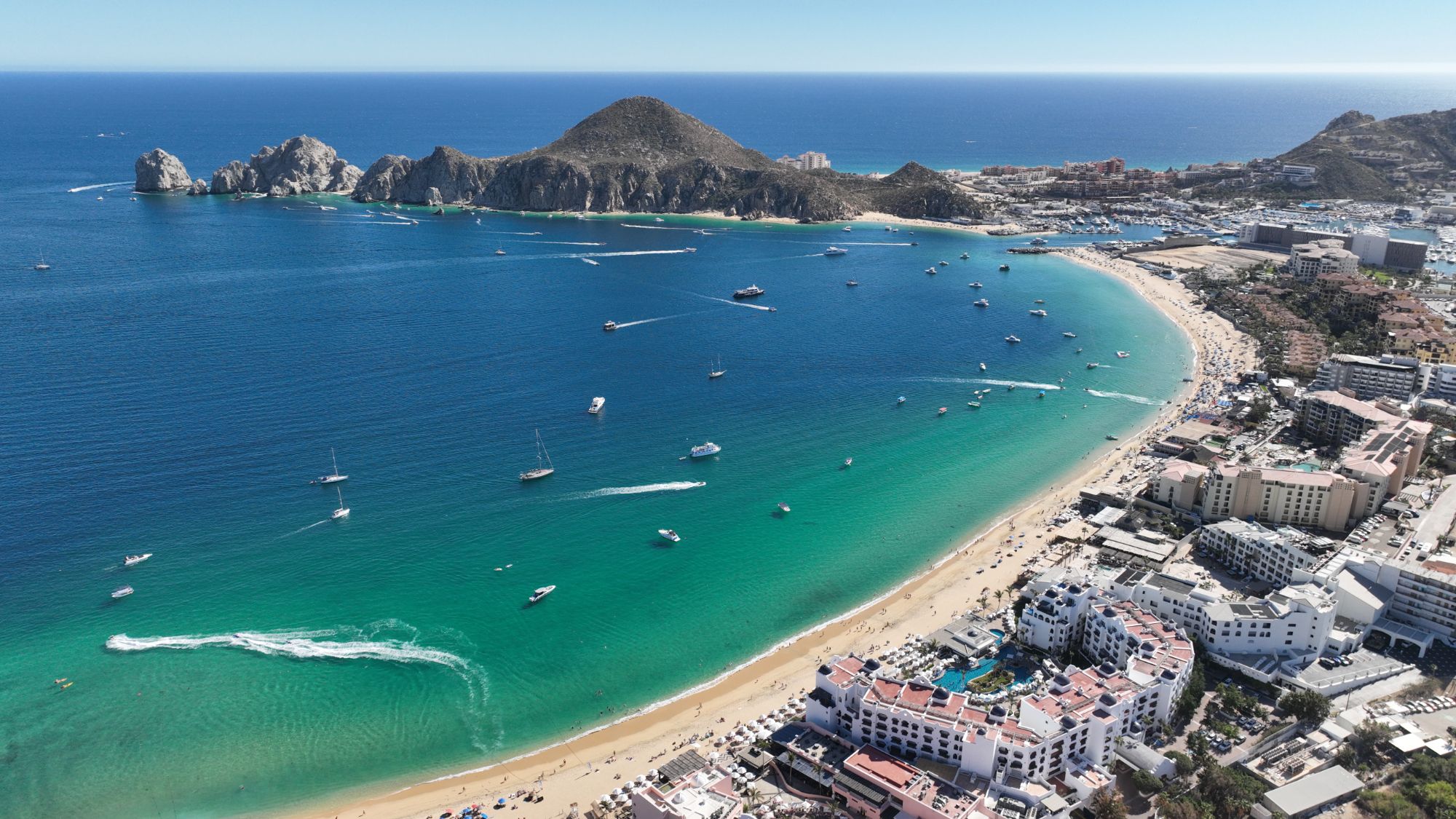
Most buyers who come to Los Cabos are already sold on the lifestyle — the Pacific views, the year-round sunshine, the fact that a direct flight from LAX or Dallas puts them here in under three hours. What they're often not prepared for is the number that shows up after the listing price.
Closing costs in Los Cabos typically run between 5% and 9% of the purchase price. On a $500,000.00 USD property, that's anywhere from $25,000.00 USD to $45,000.00 USD in additional costs — due at closing, on top of your down payment or wire transfer.
That's not a warning to scare you off. It's the kind of information that makes the difference between a smooth closing and a stressful last-minute scramble.
Here's exactly what you're paying for — and why every line item exists.
Why Closing Costs in Mexico Are Higher Than Most Buyers Expect
Buyers who've purchased property in the U.S. or Canada are used to closing costs of 2% to 3%. In Mexico, the structure is different. Several fees exist specifically to protect the buyer — the notary system, the property registry, the appraisal requirement — and they're not optional.
The good news: once you understand the structure, nothing is particularly surprising. It's a transparent system. You know what you're paying and to whom.
The Full Breakdown: What the Buyer Pays in Los Cabos
1. ISABI — Property Acquisition Tax · 3%
This is the largest single line item in your closing statement.
Effective January 1, 2025, the Municipality of Los Cabos raised the Real Estate Transfer Tax — formally called Impuesto Sobre Adquisición de Bienes Inmuebles (ISABI) — from 2% to 3%. The State of Baja California Sur then harmonized the rate across all five municipalities, making 3% the standard throughout BCS as of January 1, 2026.
On a $400,000.00 USD purchase, that's $12,000.00 USD. On $700,000.00 USD it's $21,000.00 USD. It's a one-time tax, paid to the municipality at the time of closing.
One thing many buyers miss: the tax is calculated on the highest of three values — the agreed purchase price, the government-assessed cadastral value, or the bank appraisal (if applicable). This is why a proper appraisal matters more than it used to.
2. Notary Fees · Approximately 1%–1.5%
In Mexico, every real estate transaction must go through a licensed notary public (Notario Público). This isn't a formality — the notary is a government-appointed legal professional who certifies that the transaction is valid, verifies the title, and ensures the deed is properly registered. Their fee typically runs between 1% and 1.5% of the purchase price, depending on each Notary.
Here's something worth knowing: the choice of notary is legally the buyer's right. You are not obligated to use whoever the seller or the developer suggests. Choosing your own notary — ideally one with experience in foreign buyer transactions — gives you an important layer of independent oversight.
3. Bank Trust (Fideicomiso) · $1,500–$2,500 USD setup + $500–$700/year
If you're a foreign buyer — American, Canadian, European — purchasing property within 50 kilometers of the coast, Mexican law requires you to hold title through a bank trust called a fideicomiso. Since Los Cabos sits right on the coast, this applies to virtually every residential purchase here.
The bank holds the legal title as trustee. You, as the beneficiary, retain full rights: you can use the property, rent it, renovate it, sell it, or pass it to your heirs. The bank has no claim to the property and cannot act without your written instruction.
Setup costs typically run $1,500.00 USD to $2,500.00 USD depending on the bank, plus an annual maintenance fee of approximately $500 to $700 per year. The trust lasts 50 years and is fully renewable.
Cash vs. Seller Financing: If you're purchasing with direct financing from the seller rather than paying cash, the structure becomes a fideicomiso en garantía — a trust-in-guarantee — which is more complex to establish and carries additional setup costs. Worth factoring into your financing decision early.
4. Technical Documentation & Closing Officer Fees
This is the category that tends to catch buyers off guard — not because any individual item is large, but because there are several of them:
- Certified property appraisal — required since 2025 for accurate ISABI calculation.
- No-debt certificate, predial — confirms no outstanding property tax balance.
- No-debt certificate, water services — confirms the property owes nothing to the water authority.
- Certificate of Freedom from Encumbrance (CLG) — official document issued by the Public Registry of Property and Commerce (Registro Público de la Propiedad y de Comercio) of each state. It officially certifies the current legal status of a real estate property.
- Closing officer / transaction coordinator fees — for managing and organizing all documentation and supporting documents to create the fideicomiso, technical documentation obtention and coordination with notary and banks involved.
- Escrow fee — approximately $650 USD, held by a neutral third party until all conditions are met.
Combined, these items typically add $2,500.00 to $4,500.00 USD to your closing statement, depending on property type and complexity.
5. Due Diligence Costs
Before you sign anything, you should know exactly what you're buying.
Due diligence in Los Cabos includes a home inspection, a title search to confirm clean ownership history with no liens, boundary verification, and a legal review of HOA and condo regime documents when applicable.
Budget approximately $1,500.00 to $3,000.00 USD for a thorough due diligence process. This is money well spent — it's the stage where problems surface, and where the transaction can be renegotiated or exited cleanly if needed.
A Note on ISR — Federal Acquisition Tax
In certain transactions, the buyer may also be subject to ISR por adquisición — a federal income tax that applies when a property is acquired below its appraised market value. Whether this applies, and how to structure around it, depends on the specifics of each deal. This is a conversation to have with your attorney and real estate advisor before you make an offer — not after you're at the closing table.
What the Seller Pays
For context — because buyers often ask — here's what falls on the seller's side:
|
Seller Obligation |
Notes |
|
ISR — Capital Gains Tax |
Federal tax on the profit from the sale |
|
Real estate commission |
Paid to the listing agent at closing |
|
Fideicomiso cancellation |
If the buyer is not assuming the existing trust |
|
Outstanding utility balances |
All services must be current at closing |
|
Repairs from due diligence |
If negotiated as part of the purchase agreement |
|
Additional legal acts |
Subdivision protocols, powers of attorney, etc. |
What's Actually Negotiable?
Honest answer: not much on the buyer's side. ISABI, notary fees, the appraisal, the technical certificates — these are set by law or by regulated third parties. They can't be negotiated down.
What is negotiable: repairs surfaced during the home inspection. This is the real leverage point in any transaction. A skilled agent and a solid attorney can turn due diligence findings into meaningful concessions — price reductions, repair credits, or seller contributions. Seller financing terms, when applicable, can also occasionally be structured to offset some of the buyer's closing burden.
The Real Numbers: What to Budget at Each Price Point
These are working estimates for a foreign buyer purchasing a residential property in Los Cabos using a new fideicomiso and paying cash.
|
Purchase Price |
ISABI (3%) |
Notary (~1.25%) |
Fideicomiso |
Docs & Escrow |
Due Diligence |
Est. Total |
|
$300,000 |
$9,000 |
$3,750 |
$2,000 |
$3,500 |
$2,000 |
~$20,250 |
|
$500,000 |
$15,000 |
$6,250 |
$2,000 |
$3,500 |
$2,500 |
~$29,250 |
|
$800,000 |
$24,000 |
$10,000 |
$2,500 |
$4,000 |
$3,000 |
~$43,500 |
|
$1,200,000 |
$36,000 |
$15,000 |
$2,500 |
$4,500 |
$3,500 |
~$61,500 |
These are estimates and will vary based on property complexity, your choice of notary, and whether any legal contingencies arise.
Frequently Asked Questions
Can foreigners buy property in Los Cabos?
Yes. The legal mechanism is the fideicomiso (bank trust), which grants full ownership rights to foreign buyers in Mexico's coastal zones. It's a secure, well-established structure used by tens of thousands of international property owners across Baja California Sur.
Who pays closing costs in Mexico — buyer or seller?
In Los Cabos, the buyer is responsible for the majority of closing costs: ISABI, notary fees, fideicomiso setup, technical documentation, escrow, and due diligence. The seller covers capital gains tax (ISR), the real estate commission, and costs related to their side of the transaction.
How long does it take to close on a property in Los Cabos?
Typically 45 to 90 days from accepted offer to recorded deed, assuming a clean title and standard documentation. Pre-construction purchases operate under a different timeline and legal structure — we'll cover that in a future post.
Is a fideicomiso safe?
Completely. The bank acts as trustee in name only. You remain the sole decision-maker as beneficiary. The bank cannot sell, encumber, or act on the property without your explicit written instruction. Fideicomisos are 50-year renewable agreements and fully transferable to heirs.
Are closing costs in Los Cabos higher than other parts of Mexico?
As of 2025, Los Cabos sits at the upper end of the national range, driven primarily by the ISABI increase to 3%. Some markets like Quintana Roo remain at 2%, while Tulum has moved to 4%. Total closing costs in Los Cabos typically run 5% to 9%, compared to 6% to 10% in some competing coastal destinations.
The Bottom Line
A well-prepared buyer in Los Cabos isn't surprised at the closing table. They've already accounted for closing costs in their total acquisition budget, they've chosen their notary, they've completed due diligence, and they know exactly what they're signing.
The market here is strong — 60% of properties sold in Los Cabos in 2025 were acquired by U.S. buyers, and demand continues to grow. But getting the most out of a Cabo transaction means understanding the full cost picture from day one.
If you have questions about a specific property or want a custom closing cost estimate before you make an offer, we're here.
Rember to suscribe to our newsletter to receive our curated recommendations about what's new on the market and our Baja Market Brief each month.
Claim your spot - Newsletter notifications
This content is for informational purposes only and does not constitute legal or tax advice. We recommend working with a qualified Mexican attorney and tax advisor for your specific transaction.
Categories
Recent Posts